

When building quality cabins for a ranch, every utility choice matters. You aren’t just looking for comfort; you’re looking for operational efficiency and systems that won’t fail when the temperatures drop and work with well water.
One of the most frequent questions we get from clients looking at premium hunting cabins or ranch cabins is: “Should I go with a gas or electric tankless water heater?”
At MBRK Cabins, we install both. However, based on years of experience in Texas and Oklahoma, we often lean toward gas (propane) for overall performance. Here is the breakdown of why one might be a “red flag” for your specific land setup.
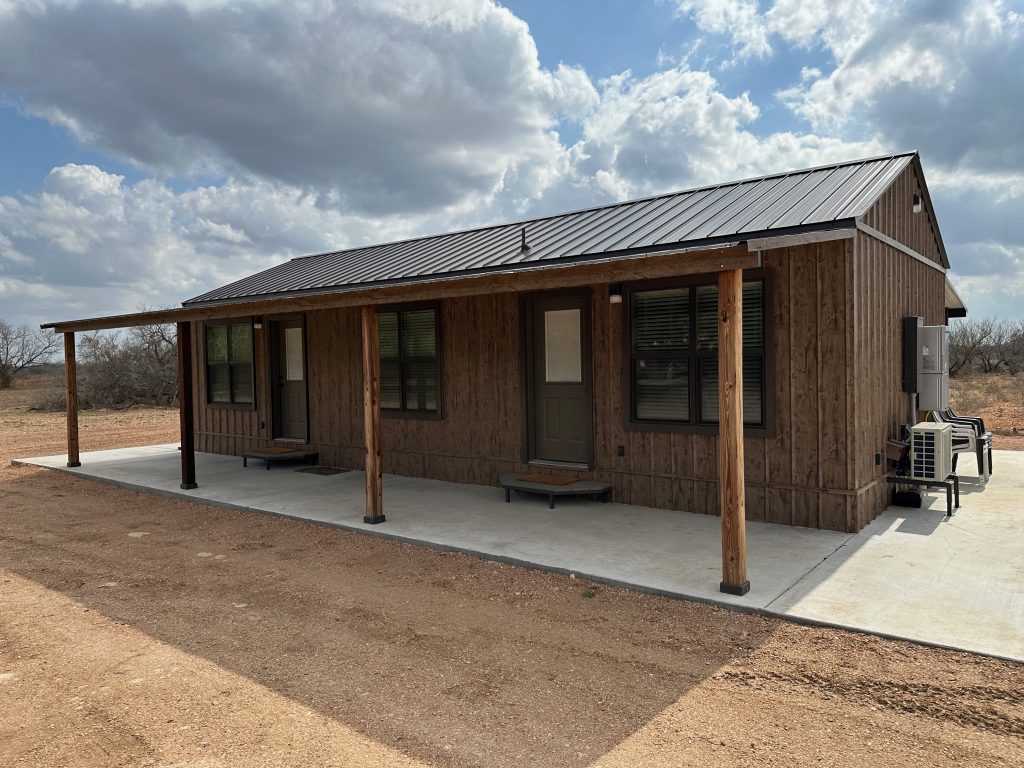
The Electrical “Gotcha”: Amperage is Everything
The biggest hurdle for electric tankless water heaters in a remote ranch bunkhouse cabin isn’t the technology; it’s the power grid.
- The Power Draw: A whole-home electric tankless unit can require 120 to 150 amps of dedicated power. In a standard ranch lodging cabin that has a 200-amp total service, the water heater alone could eat up 75% of your available electricity.
- The Upgrade Cost: If your site doesn’t already have a massive electrical transformer and heavy-duty wiring, you may face thousands of dollars in electrical infrastructure upgrades just to get the hot water running. We find that quite a few of our buyers have to bring in additional electricity to accommodate a 200amp service on a small cabin, when they were only expecting to hook up 100amp service.
- The “Dimming Light” Syndrome: In many custom-built cabins, if the electrical service isn’t perfect, turning on the shower will cause the lights to dim across the entire building.
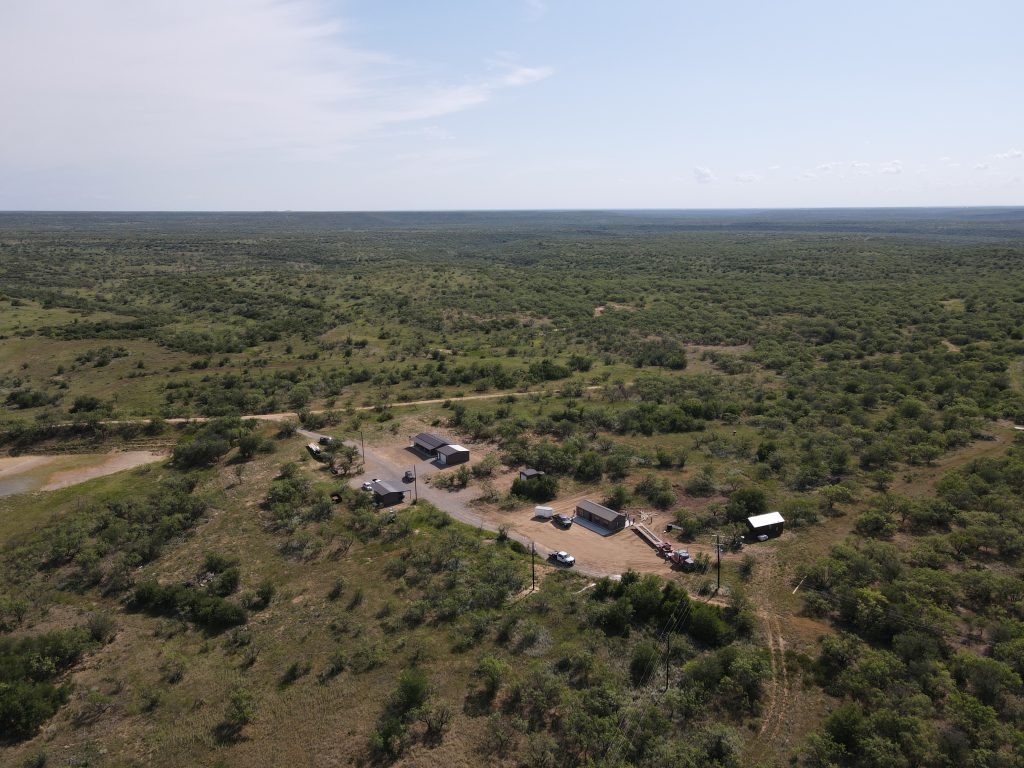
The Well Water Advantage: Why Gas Wins in Rural Areas
Most cabins for a ranch operate on well water. This introduces two specific challenges that make gas units the superior choice:
1. The “Groundwater Gap” (Temperature Rise)
Well water stays at a fairly constant temperature year-round, but in Oklahoma and North Texas, that “constant” temperature is often quite cold. To get a comfortable 120-degree shower, the heater has to work much harder. Gas burners have significantly higher BTU output than electric coils, meaning they can achieve that “temperature rise” instantly. Electric units often fail to provide a hot shower when the incoming wellwater is at its coldest.
2. Hard Water Resilience
Well water is notoriously “hard” (full of minerals like calcium and magnesium). In an electric unit, these minerals “bake” onto the heating elements. Over time, this scale acts as an insulator, forcing the element to get hotter and hotter until it eventually burns out. Gas heat exchangers are generally more robust; while they still require descaling, they are less prone to the catastrophic “popped element” failures common in electric systems used on wells.
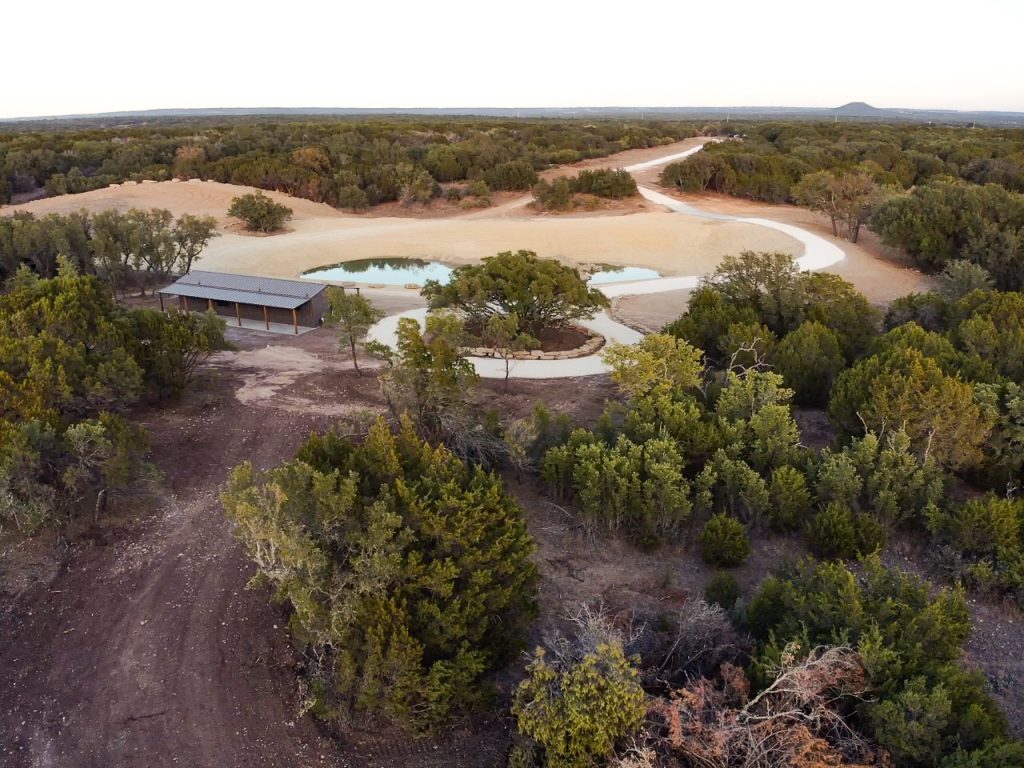
Why Gas (Propane) is the King of the Hunting Camp
For luxury hunting lodge cabins and remote worker cabins, gas-fired tankless units (typically running on propane) offer better performance:
- Higher Flow Rates: Gas units are significantly more powerful. If you have a bunkhouse hunting cabin where three people need to shower at the same time after a morning hunt, a gas unit can keep up.Electric units often struggle to provide enough “gallons per minute” (GPM) when multiple faucets are open.
- Operational Reliability: Gas units only require a tiny amount of electricity (usually 1–3 amps) to run the digital display and ignition. This means they are much easier to run on a small backup generator or solar battery system during a power outage, a common occurrence on remote land.
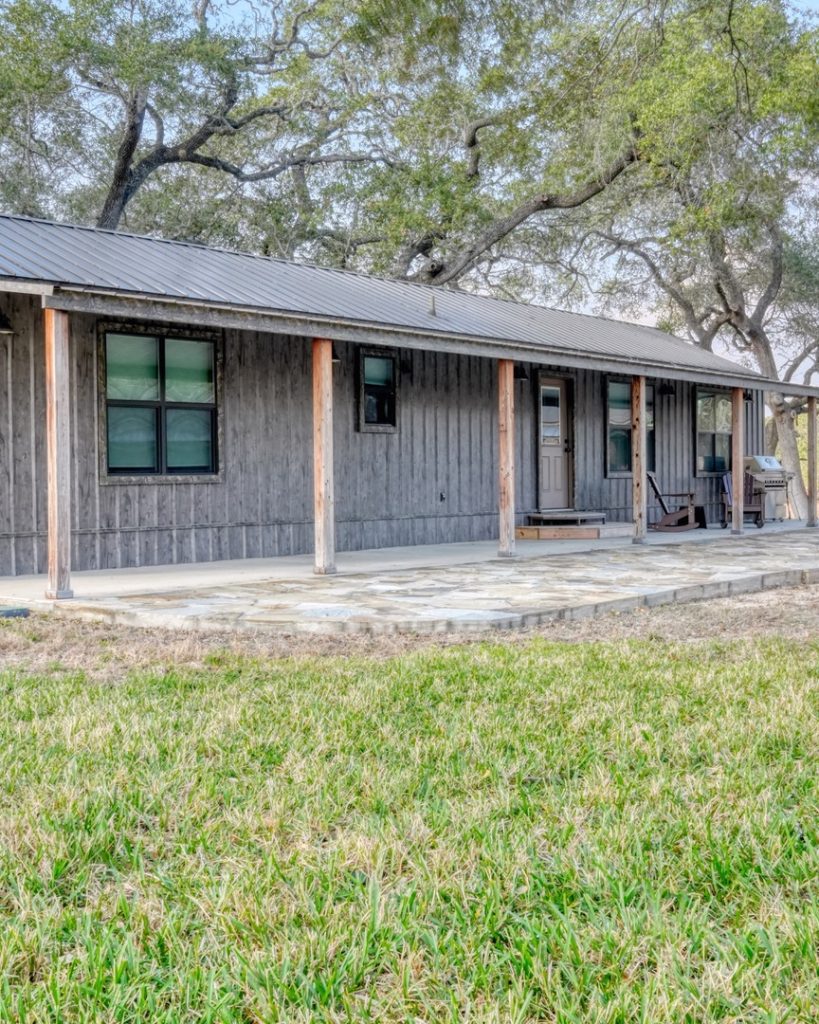
Maintenance and “Ranch Water” Realities
Whether you are building durable hunting cabins or ranch guest cabins, maintenance is the key to longevity.
- Descaling is Non-Negotiable: Both systems require annual flushing to remove scale buildup. At MBRK, we design our plumbing manifolds with service valves specifically for this purpose.
- Maintenance Tip: We recommend a simple water softener or a “scale shield” pre-filter for all cabins built to last on rural land to protect your investment from the harsh effects of well water.
The Financial Verdict: Upfront vs. Long-Term
- Electric: Potentially massive installation costs if your site electrical isn’t ready. Best for small cabins or “point-of-use” sinks where demand is low.
- Gas: Gas offers superior performance for our quality cabins of any size and lower monthly operating costs if you already have a propane tank on-site, and if you do not have a tank on-site, the cost of putting a smaller tank on property is a worthy investment that will pay for itself in electrical savings, and the cost of having to up your service.
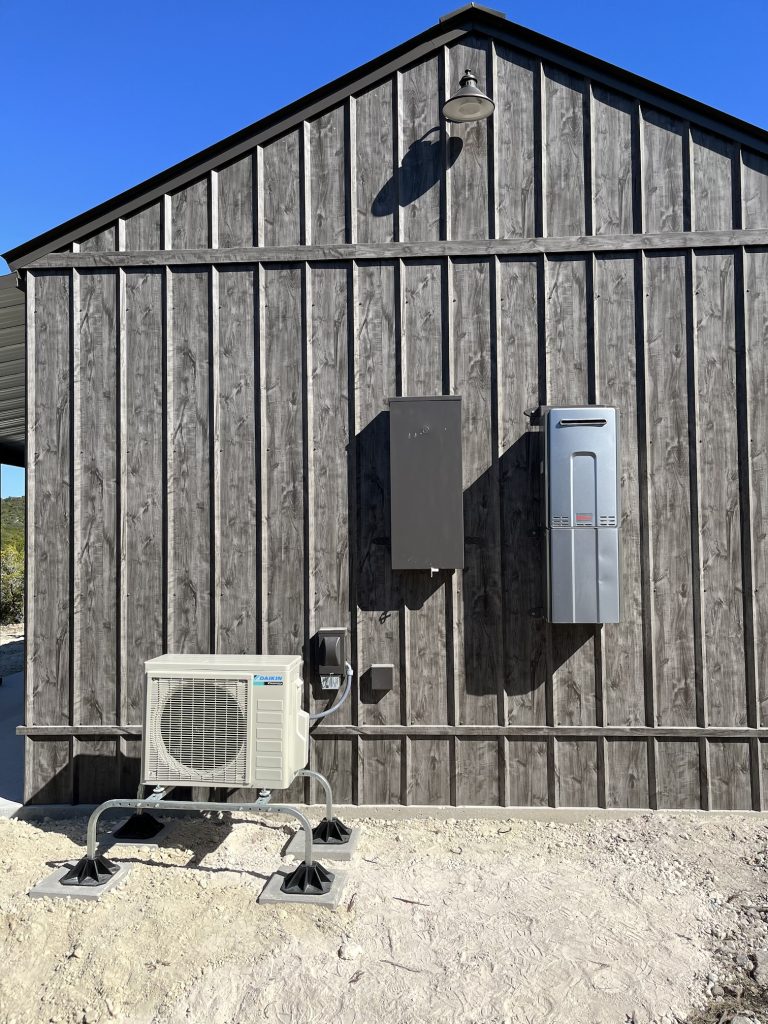
Summary: Which is Right for Your Ranch?
If you are building a luxury hunting lodge or a large ranch bunkhouse, go with Gas. The peace of mind and the ability to handle multiple showers simultaneously with cold well water is worth the investment.
If you are building a small guest cabin with very low occupancy and you have plenty of electrical capacity, Electric might save you some money on the initial build.
At MBRK, we don’t just build steel frame cabins; we build systems designed for the reality of your land. Good news – a gas tankless water heater is standard, not an upgrade!
Building a legacy on your ranch?
Talk to us about the best mechanical specs for your ranch cabins in Texas.
#RanchCabins #TanklessWaterHeater #HuntingLodge #OffGridLiving #TexasRanch #OklahomaLand #MBRKCabins #CustomCabins #RanchUtility